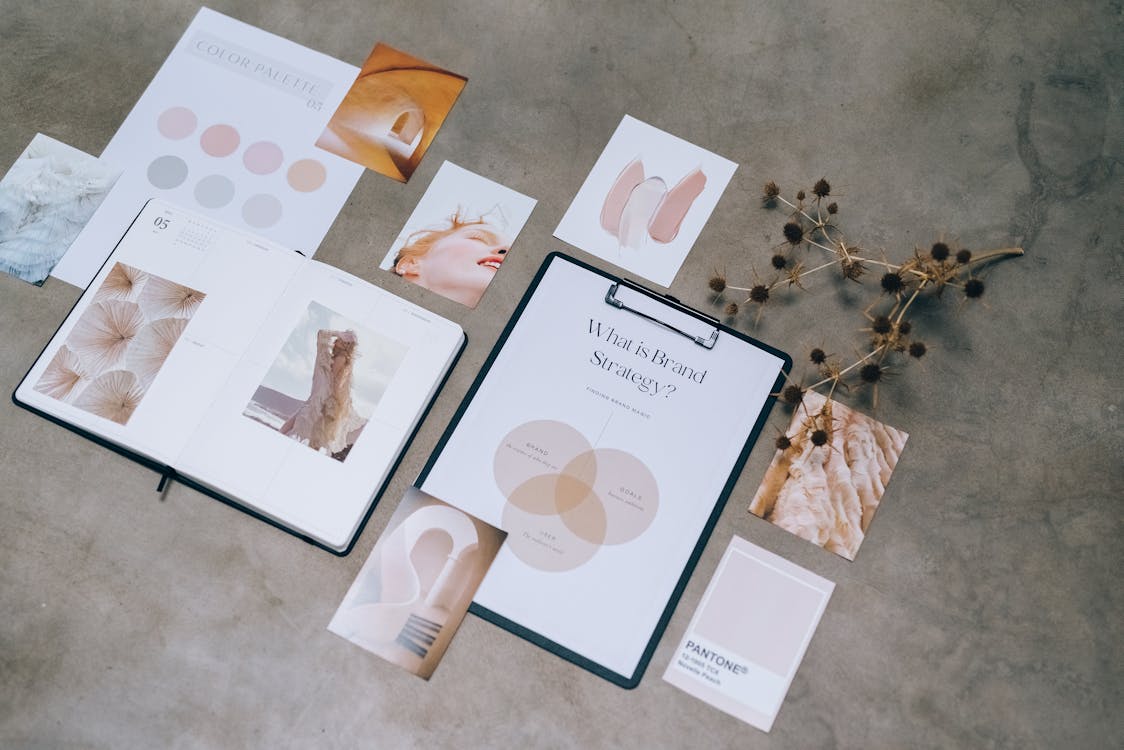
A brand identity is far more than a logo. It is the complete visual and verbal system that shapes how people perceive your business, from your color palette and typography to your tone of voice and the way your website feels to navigate. When it works, your brand identity builds instant trust, communicates professionalism, and makes you memorable. When it does not, it creates friction, confusion, and missed opportunities.
But brand identities are not static. Businesses evolve, markets shift, and design conventions change. What felt fresh and strategic five years ago may now be working against you. The challenge is that brand drift happens gradually. You rarely wake up one morning and realize your brand is outdated. It is a slow erosion that compounds over time.
Here are five clear signs that your brand identity needs a refresh, and what you can do about it.
Sign 1: Your Visual Identity Does Not Match Your Current Offering
Companies evolve. You launch new services, enter new markets, shift your positioning, or refine your target audience. But your brand identity often stays frozen at the point it was created. If your logo, website, and marketing materials still reflect the business you were running in 2018, but you have since expanded, pivoted, or matured, there is a fundamental disconnect between what you do and what your brand communicates.
This misalignment is not just an aesthetic issue. It is a revenue problem. According to research by Lucidpress (now Marq), consistent brand presentation across all platforms can increase revenue by up to 23%.1 When your brand identity accurately reflects your current services, positioning, and values, every touchpoint reinforces the same message, and that consistency builds the trust that drives conversions.
Ask yourself: if a potential client visits your website today, do they immediately understand what you offer in 2026, or are they seeing the ghost of a business that no longer exists?
Sign 2: You Blend in with Competitors

Open your website side by side with your three closest competitors. If the visual impression is interchangeable, similar colors, similar layouts, similar typography, similar stock photography, your brand identity is not doing its job. The entire purpose of a brand is differentiation. If customers cannot tell you apart from competitors at a glance, they have no visual reason to choose you over anyone else.
In crowded markets, differentiation is not a luxury. It is a survival mechanism. A distinctive brand identity creates what psychologists call a recognition advantage: the ability for your brand to be recalled and identified faster than competitors. This matters especially in digital environments where attention spans are short and first impressions form in milliseconds.
A brand refresh gives you the opportunity to audit your competitive landscape and deliberately carve out a visual position that is uniquely yours. This does not mean being different for the sake of it. It means finding the visual expression that authentically represents what makes your business distinct.
Sign 3: Your Brand Feels Dated
Design trends evolve. The heavy gradients and glossy effects of the early 2010s gave way to flat design, which then evolved into the clean, minimal, and purposeful aesthetic that defines professional brands in 2026. A visual identity that looked modern in 2018, with its trendy geometric patterns, overused sans-serif typefaces, or teal-and-coral color schemes, can feel unmistakably outdated today.
This is not about chasing every design fad. It is about ensuring your brand communicates relevance. When a brand looks outdated, customers subconsciously question whether the business behind it is also outdated, in its skills, its knowledge, and its ability to deliver modern solutions.
Some of the world's most recognized brands understand this. Burger King completed a major brand refresh in 2021, returning to a cleaner, retro-inspired design that felt both nostalgic and modern. Pfizer overhauled its identity the same year to reflect its evolution from a pharmaceutical company to a science and innovation leader. Kia dropped its oval emblem in favor of a sharp, angular wordmark to signal its shift toward electric vehicles and modern mobility.3 These companies did not rebrand because their old logos were broken. They refreshed because their identities no longer reflected who they had become.
A brand refresh is not about chasing trends. It is about ensuring your visual identity accurately communicates who you are today, not who you were five years ago. If your brand looks like it belongs in a different era, your customers are noticing, even if they do not say it out loud.
Sign 4: You Are Embarrassed to Hand Out Your Business Card

This is the most honest test of brand health. When you meet a potential client at a conference, send a proposal, or share your website link, do you feel confident, or do you feel a small pang of hesitation? If you find yourself apologizing for your website ("We are in the middle of updating it") or avoiding sharing your marketing materials, your brand has a trust problem. And if you do not trust your own brand, why would anyone else?
This instinct is backed by research. Stanford University's Web Credibility Research project found that 75% of users judge a company's credibility based on its website design.2 That means three out of four potential customers are forming an opinion about your competence, reliability, and professionalism based on how your digital presence looks and feels, before they have read a single word of your content or spoken to anyone on your team.
Your brand identity is often the first and sometimes the only impression a potential client gets. If that impression does not inspire confidence, no amount of great service behind the scenes can compensate.
Sign 5: Your Brand Does Not Work Across Digital Channels
A logo designed for a print business card in 2015 may not work as a social media avatar at 40 pixels wide. A color palette chosen for brochures may lack the contrast needed for mobile interfaces. A brand system built for a single website may fall apart when applied to Instagram stories, email newsletters, pitch decks, and app icons.
In 2026, your brand needs to function seamlessly across an expanding ecosystem of digital touchpoints. This is what brand designers call a responsive brand system: a visual identity flexible enough to maintain recognition and impact across every format and screen size, from a 4K desktop monitor to a smartwatch notification.
If your current brand identity was not designed with this flexibility in mind, it is likely creating inconsistencies across your digital presence. Each inconsistency chips away at the professional perception you are trying to build. A modern brand refresh addresses this by creating a complete system, including logo variations, icon sets, flexible layouts, and clear usage guidelines, that works everywhere your brand appears.
What a Brand Refresh Actually Involves
A common misconception is that a brand refresh means starting from scratch. It does not. A refresh is an evolution, not a revolution. The goal is to take what already works, your brand equity, your name recognition, your core values, and bring them into alignment with where your business is today and where it is heading.
A typical brand refresh follows four stages:
- Strategy. Audit your current brand, analyze your competitive landscape, clarify your positioning, and define the strategic direction for the refresh. This ensures every design decision is grounded in business goals, not personal taste.
- Visual identity. Refine or redesign your logo, color palette, typography, imagery style, and graphic elements. This is where the brand starts to take its new visual form.
- Brand guidelines. Document the complete brand system in a comprehensive style guide that ensures consistency across every touchpoint, from your website and social media to presentations and printed materials.
- Implementation. Roll out the refreshed brand across all channels: website, social profiles, email templates, marketing collateral, and internal documents. A phased rollout ensures a smooth transition without disrupting business operations.
The process typically takes 4 to 8 weeks depending on scope and complexity. The result is a brand identity that feels both familiar to existing customers and fresh to new audiences.
Frequently Asked Questions
A brand refresh updates and modernizes your existing brand identity, refining the logo, colors, typography, and visual system, while keeping the core brand strategy and recognition intact. A full rebrand is a complete overhaul that may include a new name, new positioning, and an entirely new visual identity. Most businesses need a refresh, not a rebrand.
There is no fixed timeline, but most brand strategists recommend evaluating your brand identity every 5 to 7 years. However, major business changes, such as entering new markets, shifting your target audience, or launching new products, can trigger the need for a refresh sooner.
A typical brand refresh takes 4 to 8 weeks, depending on scope. This includes brand strategy review, visual identity design, brand guidelines creation, and an implementation roadmap. Larger organizations with complex brand ecosystems may need 3 to 6 months for full rollout across all touchpoints.
Not if it is done well. A brand refresh evolves your identity rather than replacing it, so existing customers still recognize your brand. The key is maintaining core brand elements that carry recognition, such as a signature color or brand mark, while modernizing the overall system. Clear communication about the change also helps ensure a smooth transition.
Sources
- Lucidpress (now Marq). "The Impact of Brand Consistency." 2019. marq.com
- Stanford Web Credibility Research. "How Do People Evaluate a Web Site's Credibility?" Stanford Persuasive Technology Lab, 2002. credibility.stanford.edu
- Rebranding case studies: Burger King (2021), Pfizer (2021), Kia (2021). Covered extensively by Brand New / UnderConsideration